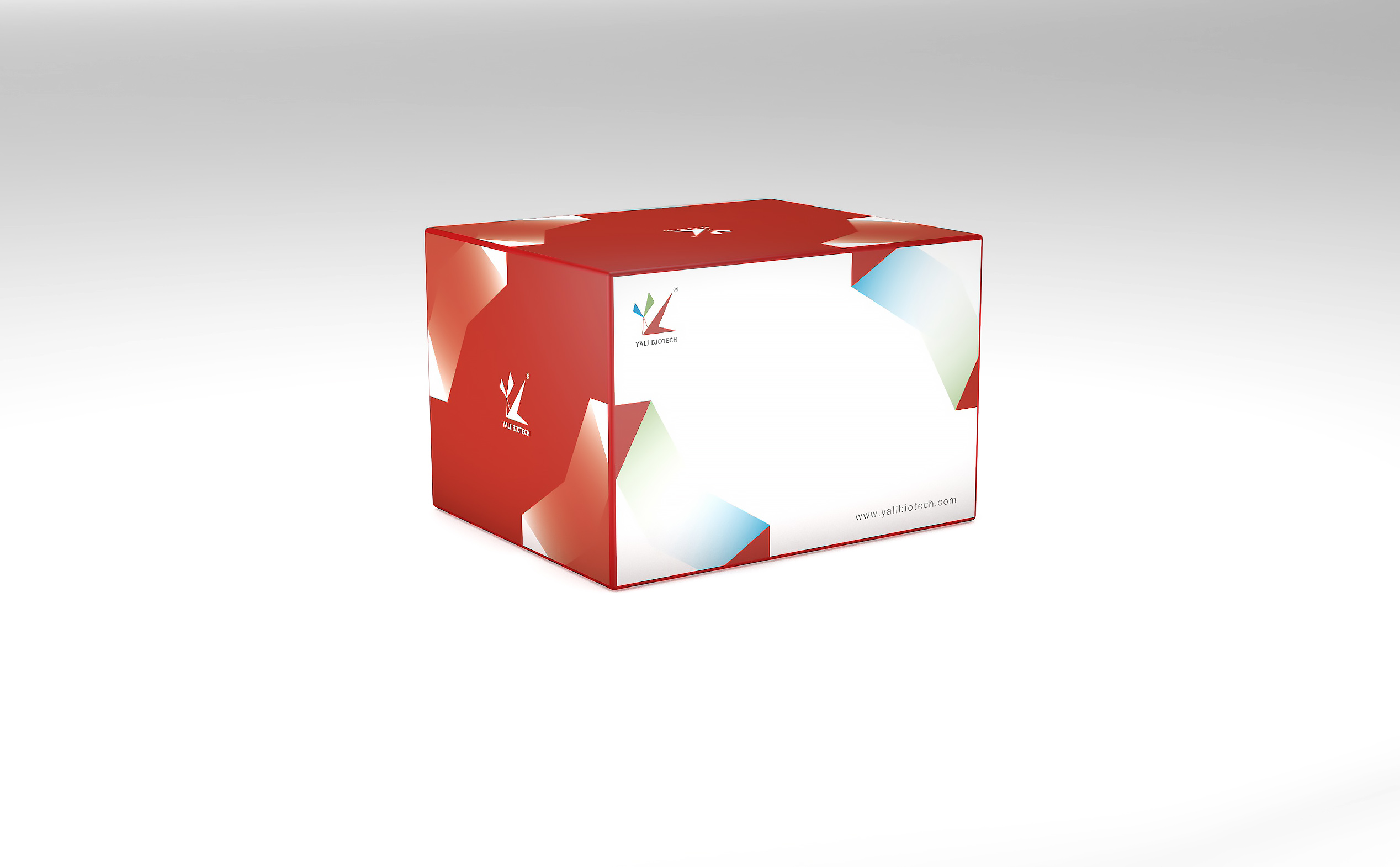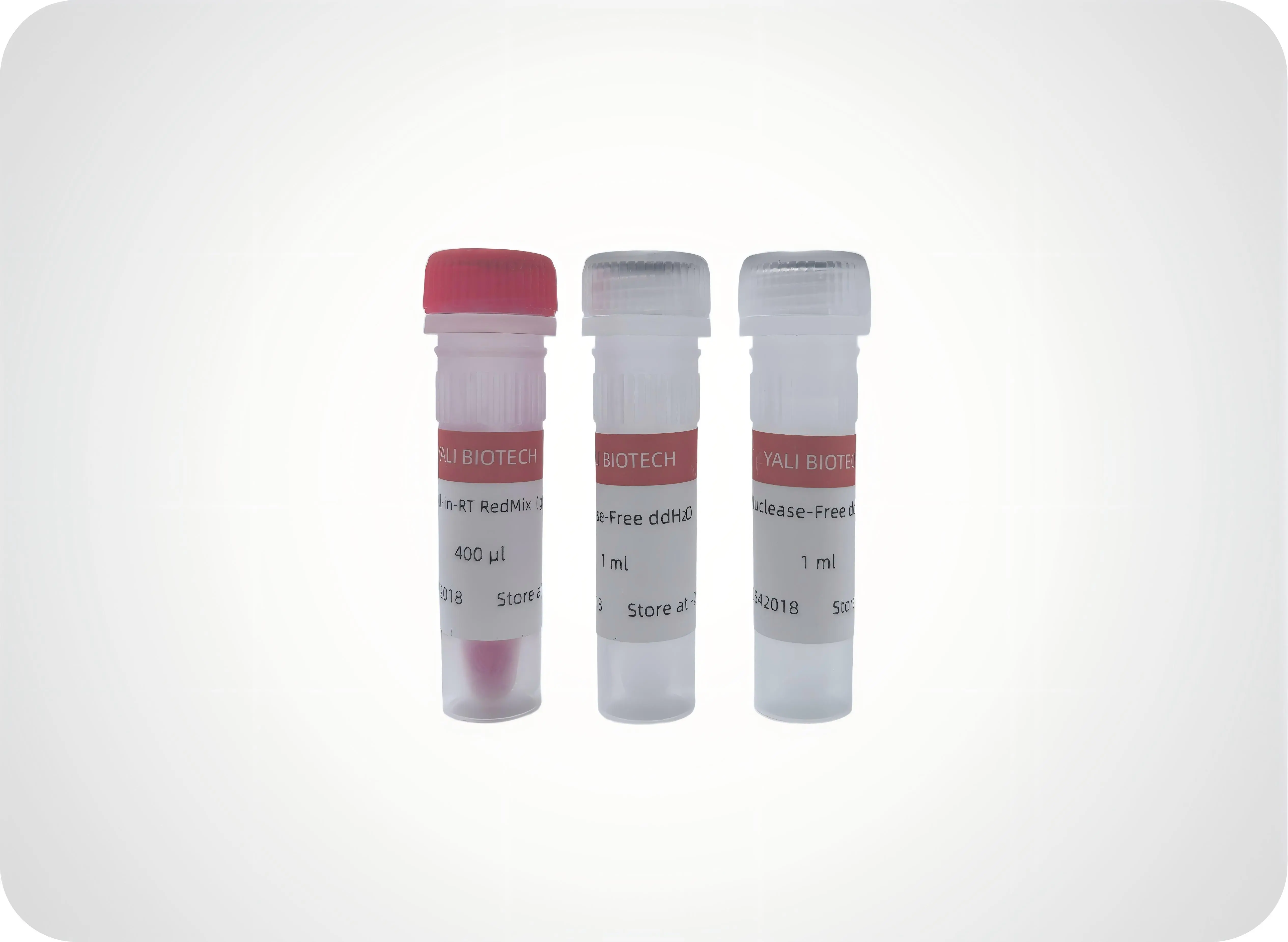
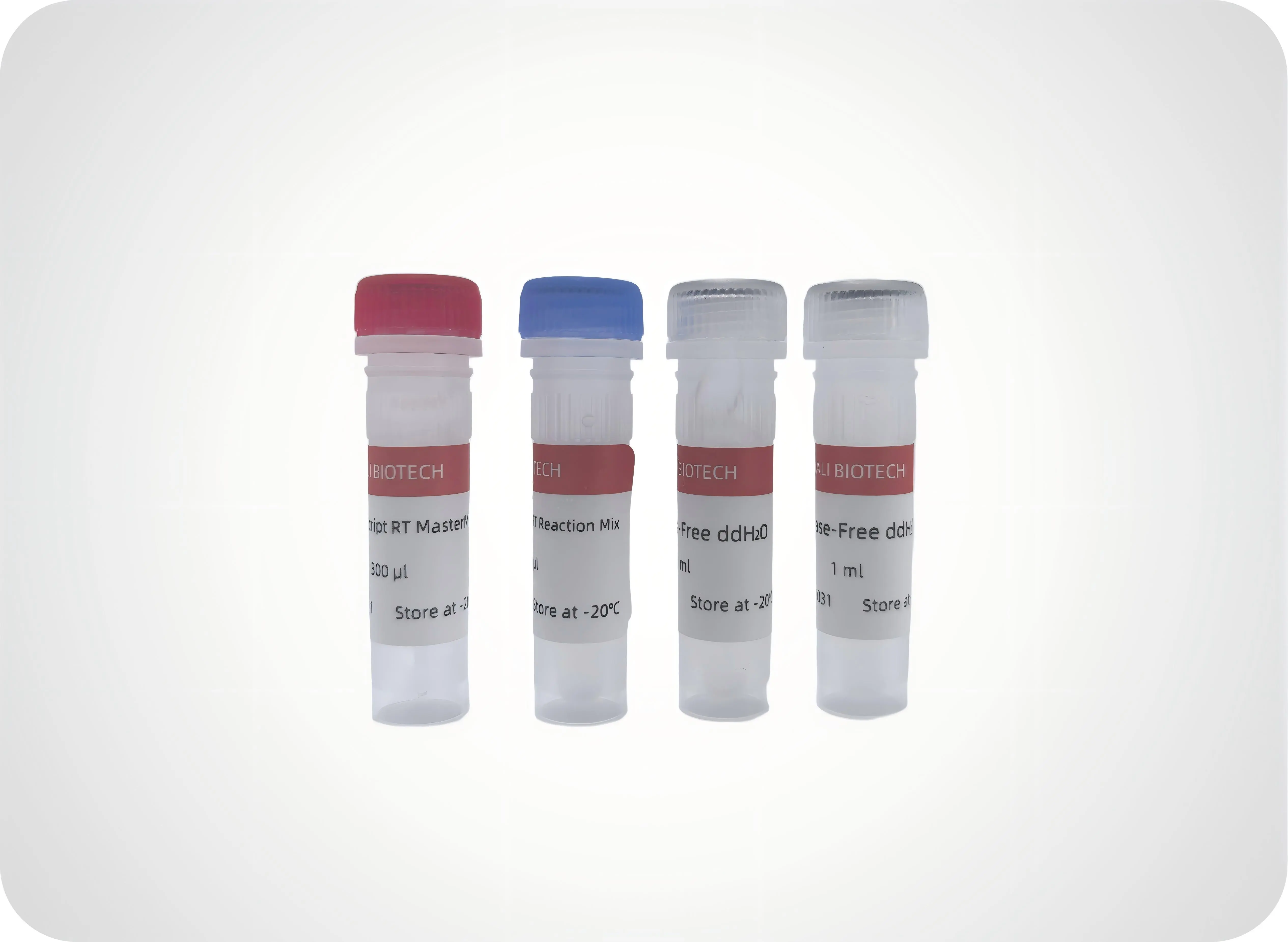
A validated master mix that simplifies cDNA synthesis prior to PCR/qPCR with consistent, reproducible results.
| Number | Specifications | Catalog Price | Add To Cart |
|---|---|---|---|
| YPM51361 | 100rxns | Online Consult | + |
YALEPIC® All-in-Mix 1st Strand cDNA Synthesis Kit(gDNA off)provides a rapid, stable and efficient method of cDNA synthesis which is perfect for downstream two-step Real Time PCR. The RT MasterMix and the Reaction Mix contains all the required reagents of RT-PCR (include RT Enzyme, RNase Inhibitor, Random primers, Oligo dT Primer, dNTP Mixture and Reaction Buffer), and a special heat-sensitive DNase to efficiently remove genomic DNA without interfering with cDNA. within 30 minutes across a broad temperature range (45–60°C). Integrated thermolabile dsDNase specifically eliminates double-stranded DNA while maintaining cDNA integrity, allowing synchronous genomic DNA removal and reverse transcription. Reactions proceed rapidly upon addition of only template RNA and nuclease-free water. The synthesized first-strand cDNA is immediately suitable for downstream applications including library construction, PCR, qPCR, and hybridization assays.
● High performance reverse transcription: 95% of RNA template could be reverse transcribed to cDNA.
● Good for complex template: This product can be used for the reverse transcription of RNA template which has complex secondary structure and high GC content.
● High compatibility for downstream analysis: This product could be co-used with many type of qPCR product for analysis with high sensitivity and stability.

Store at -20°C and transport at ≤0°C.
The kit’s Mix contains an optimized gDNA removal component that degrades genomic DNA in situ during the reverse transcription pre-incubation step. For routine total RNA samples, no additional DNase treatment is needed. For crude RNA with high gDNA contamination, extending the pre-incubation time will thoroughly remove contaminants, preventing non-specific genomic amplification in qPCR.
With the proprietary RNase H-minus reverse transcriptase, the kit can synthesize up to 15 kb full-length cDNA under optimal conditions, and 8-10 kb under standard conditions, with no RNA hydrolysis side effects. It is suitable for large-fragment gene cloning and full-length cDNA library construction.
The kit contains pre-mixed Oligo dT + random hexamer primers, suitable for most mRNA reverse transcription. For gene-specific reverse transcription, you can substitute with your own gene-specific primers without affecting gDNA removal or reverse transcriptase activity.
Yes. The kit’s product has undergone thorough gDNA removal and is compatible with both standard agarose gel PCR amplification and SYBR Green qPCR quantification. It is a versatile one-tube cDNA reagent for multiple downstream applications.
The standard single reaction volume is 20 microL. The 100rxns specification provides 100 standard 20 microL reverse transcription reactions. The reaction volume can be scaled proportionally as needed.
The reverse transcriptase has strong thermostability and maintains good efficiency with slightly degraded RNA. For severely degraded RNA, we recommend re-extracting qualified total RNA to ensure cDNA yield and qPCR reproducibility.
Unopened, stored at -20 degrees C in the dark, the shelf life is 12 months. Repeated freeze-thaw reduces enzyme activity. We recommend aliquoting into smaller portions upon receipt to minimize freeze-thaw cycles.
It is compatible with total RNA from animal and plant cells, bacteria, fungi, insects, and other species. For prokaryotic RNA without polyA tails, the pre-mixed random primers efficiently initiate cDNA synthesis.
Fresh product can be stored at 4 degrees C for 1-3 days. For long-term storage, aliquot and store at -20 degrees C or -80 degrees C, avoiding repeated freeze-thaw degradation.
The optimized formulation efficiently synthesizes cDNA from as little as tens of nanograms of total RNA, suitable for single-cell trace RNA reverse transcription and low-abundance gene qPCR detection.
Short-term room temperature thawing followed by prompt return to -20 degrees C does not affect activity. If left at room temperature for more than 12 hours, we recommend running a small-scale pilot experiment to verify enzyme activity.




Production center: 4th floor, Building 9, Yangshan Science and Technology
Industrial Park,No. 8 Jinyan Road, Suzhou High-tech Zone
Marketing center: Pujiang High-tech Park, Minhang District, Shanghai
Copyright: 2026 YALI Biotech Co., Ltd.
 Scan to follow us