
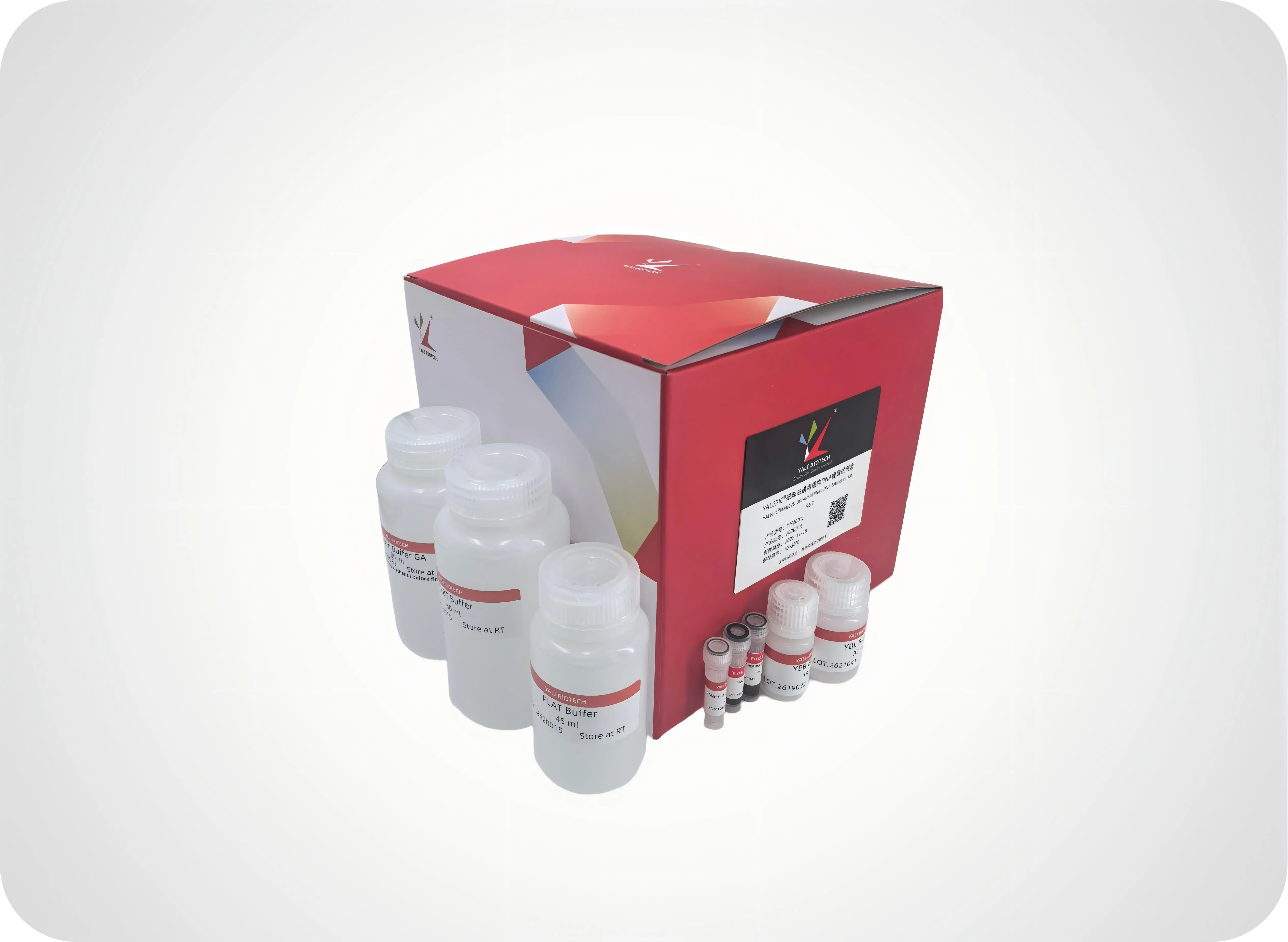
An optimized magnetic bead workflow that turns plant tissue (leaf, seed, root) into high-quality genomic DNA ready for downstream applications.
| Number | Specifications | Catalog Price | Add To Cart |
|---|---|---|---|
| YM26012 | 96T | Online Consult | + |
| YM26012-A(Prepackaged) | 32T | Online Consult | + |
| YM26012-B(Prepackaged) | 48T | Online Consult | + |
| YM26012-C(Prepackaged) | 96T | Online Consult | + |
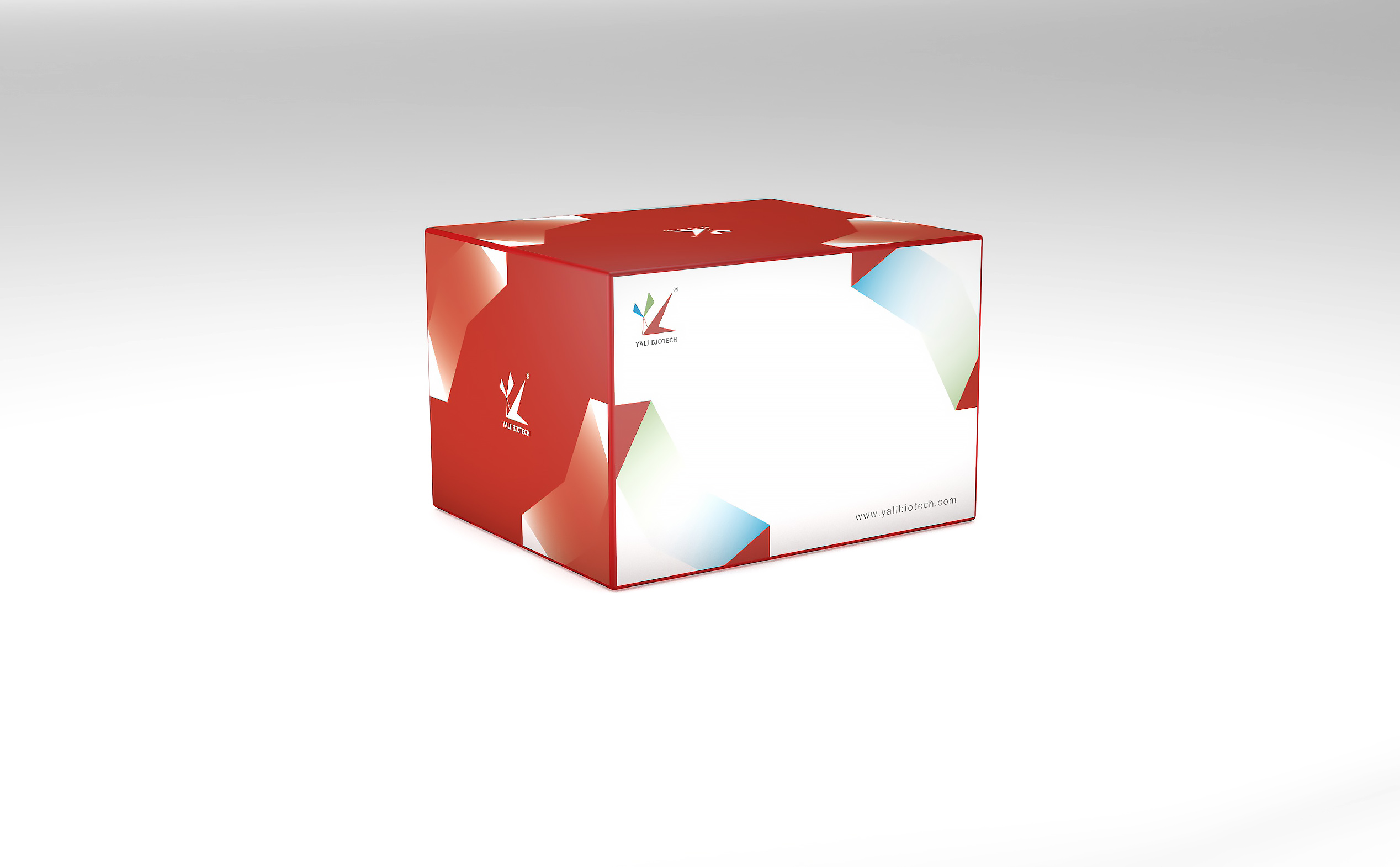
YALEPIC® MagEVO Universal Plant DNA Extraction Kit is suitable for the efficient extraction of genomic DNA from a variety of plant tissues. The high-affinity magnetic beads used in the kit can adsorb nucleic acids in a high-salt buffer and release nucleic acids in a low-salt elution buffer, thereby achieving rapid separation and purification of nucleic acids. The extracted DNA is suitable for various routine experiments in molecular biology, including enzyme digestion, PCR, Southern Blot and other experiments.
≤100mg fresh sample;
≤30mg dry sample.
Transport at room temperature.
Storage at 10 ~ 30°C for one year.
If ambient temperatures often exceed 30°C, we suggest storing Proteinase K and Magbeads PM at 2 ~ 8°C (protect from freezing).
Yes. This kit (YALEPIC MagEVO Universal Plant DNA Extraction Kit) is specifically formulated for complex plant samples rich in polysaccharides and polyphenols. The magnetic bead method combined with a unique buffer system effectively removes polysaccharides, polyphenols, proteins, and other interferents. Extracted DNA has high purity (A260/A280 typically 1.7-2.0) and can be directly used for PCR, sequencing, and other downstream experiments. Typical suitable samples include cotton leaves, pine needles, ginkgo leaves, banana flesh, grape flesh, potato tubers, etc.
Yes. The kit offers pre-packaged specifications (Type A: 32T/48T/96T pre-filled plates) that seamlessly integrate with mainstream pipetting-based automated workstations and magnetic rod-based automated nucleic acid extractors. Up to 96 samples can be processed simultaneously, greatly improving throughput for large-scale breeding screening, germplasm resource identification, and other applications.
Yes. The extracted DNA has high purity, no protein or RNA contamination, and no PCR inhibitor residue. It can be directly used for PCR, Real-Time PCR, qPCR, Southern Blot, library construction, and high-throughput sequencing (NGS) and other downstream molecular biology experiments.
Low DNA purity is typically caused by: (1) Insufficient lysis, incomplete nucleic acid release; (2) Poor bead dispersion, adsorption capacity too strong or weak; (3) Insufficient washing, residual protein or salt; (4) Excessive sample input beyond kit capacity. Recommendations: optimize lysis conditions, thoroughly mix beads, strictly follow washing protocols, and use recommended sample amounts.
Possible causes and solutions: (1) Insufficient starting material – moderately increase sample amount within recommended range; (2) Insufficient lysis – ensure thorough liquid nitrogen grinding or tissue homogenization, mix immediately after adding lysis buffer; (3) Insufficient elution – pre-warm Elution Buffer to 65 degrees C or extend elution to 5 minutes; (4) Intrinsically low DNA content (e.g., old dried seeds) – optimize pre-treatment. For complex samples (rice, corn, etc.), keep starting material below 50 mg fresh weight or 10 mg dry weight.
For the magnetic bead method, bead aggregation or abnormal adsorption may result from high lysis buffer viscosity or uneven mixing. Recommendations: (1) Ensure thorough sample grinding and lysis to avoid high viscosity; (2) Vortex or invert to mix thoroughly before magnetic separation; (3) Appropriately reduce starting sample amount.
Recommended sample amounts: common plant leaves/fungi 20-100 mg; polysaccharide-rich tubers/roots 20-50 mg; seeds 10-30 mg; fruits 50-200 mg. For samples with extremely high polysaccharide/polyphenol content (banana flesh, grape flesh, cotton roots, etc.), start with low amounts and optimize gradually.
Main advantages of magnetic bead vs column-based methods: (1) Superior automation compatibility – magnetic beads seamlessly integrate with automated workstations for 96-well high-throughput operation, while columns are limited by centrifugation steps; (2) Larger DNA fragments (>30 kb) from magnetic beads, more suitable for long-fragment PCR and large-fragment library construction, vs typically <9 kb from columns; (3) More stable purification of polysaccharide/polyphenol samples, avoiding column clogging issues.
This kit uses superparamagnetic particle purification technology. Functionalized bead surfaces specifically adsorb nucleic acid molecules, with an external magnetic field enabling rapid nucleic acid enrichment and separation. Compared to traditional CTAB: (1) No chloroform or organic reagents needed, safe and environmentally friendly; (2) Significantly shorter operation time (1 hour vs 2-4 hours); (3) Supports automated high-throughput operation; (4) More stable and consistent purification of polysaccharide/polyphenol samples. CTAB’s advantage is lower cost, but it is clearly inferior in throughput, automation, and ease of operation.




Production center: 4th floor, Building 9, Yangshan Science and Technology
Industrial Park,No. 8 Jinyan Road, Suzhou High-tech Zone
Marketing center: Pujiang High-tech Park, Minhang District, Shanghai
Copyright: 2026 YALI Biotech Co., Ltd.
 Scan to follow us