
| Number | Specifications | Catalog Price |
|---|---|---|
| YC22004 | 50T | Online Consult |
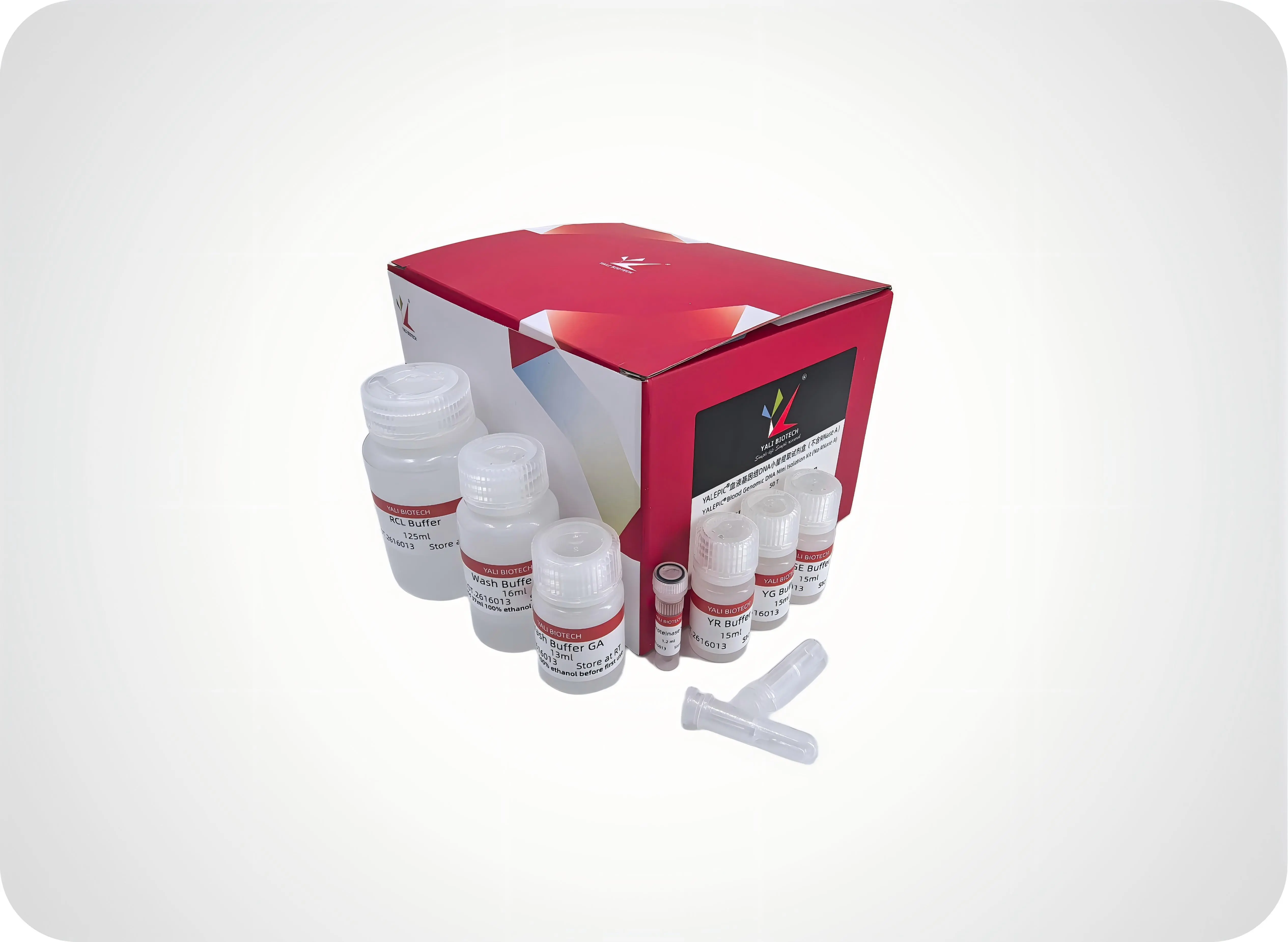
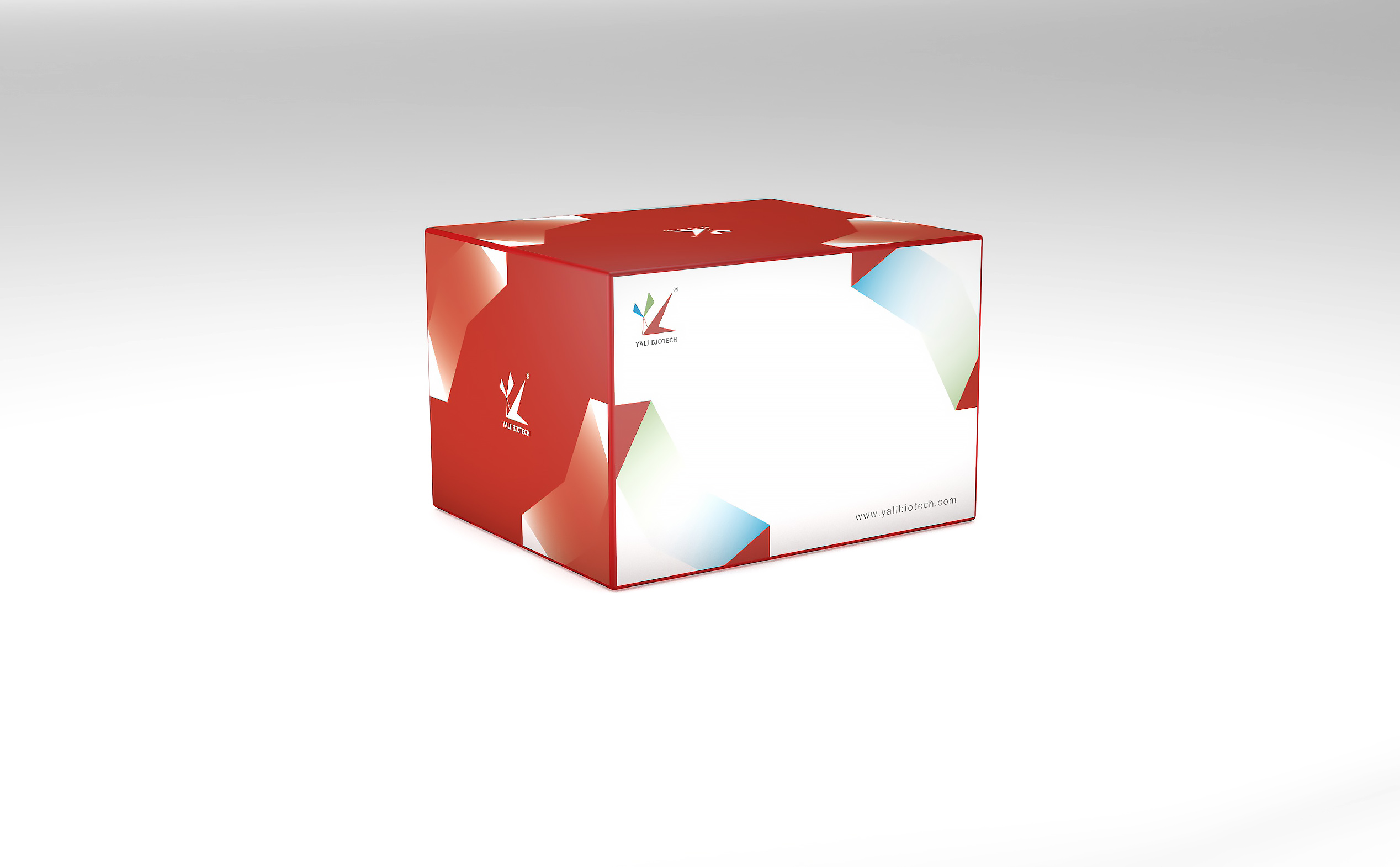
YALEPIC® Blood Genomic DNA Mini Isolation Kit(No RNase A) provides a simple and convenient way to isolate high quality genomic DNA from 0.1~1 ml of fresh or frozen samples such as anticoagulated whole blood, plasma, serum, buffy coat, lymphocytes. This kit employs silica-membrane purification technology, offering high extraction efficiency, exceptional nucleic acid purity, and superior reproducibility.The purified genomic DNA exhibits high purity and stable quality, making it suitable for downstream applications including PCR, restriction enzyme digestion,Southern blot, and more.
0.1–1 ml fresh or frozen anticoagulated whole blood without nucleated cells;
5–20 μl fresh or frozen anticoagulated whole blood with nucleated cells (e.g., from species with nucleated erythrocytes such as avian, bird, amphibian).
Transport at room temperature.
RCL Buffer at 2~8℃, Other components at 10 ~ 30°C for one year.
This kit recommends processing 200 microL of anticoagulated whole blood (EDTA, sodium citrate, etc.) per spin column. It can also be used for buffy coat or bone marrow samples. If white blood cell count is very low (e.g., severe leukopenia patients), sample volume can be increased to 300 microL with repeated binding steps to ensure recovery.
The entire blood genomic DNA extraction process typically takes 30-40 minutes. Steps include: sample lysis (10 min), binding (2 min), two washes (1 min centrifugation each), membrane drying (1 min), and elution (1 min). For maximum yield, pre-warm elution buffer to 60 degrees C and incubate 5 minutes before centrifugation – total time ~45 minutes with 10-15% yield improvement.
Absolutely. Extracted genomic DNA typically has OD260/280 of 1.7-1.9, free of heme and protein residues, and contains no organic solvents. It can be directly used as template for routine PCR, qPCR, multiplex PCR, NGS library construction, methylation analysis, and other downstream applications. For demanding digital PCR, dilute with TE buffer to avoid trace salt ions affecting droplet generation.
Common causes and solutions: (1) Low white blood cell count – increase blood volume or enrich leukocyte layer by centrifugation before lysis; (2) Frozen blood not fully mixed – thaw slowly on ice and invert to mix; (3) Insufficient proteinase K lysis – verify buffer not expired, maintain 56 degrees C, extend to 20 minutes; (4) Elution buffer missed membrane center – apply vertically to membrane center, incubate 2-5 minutes at room temperature before centrifugation. If still no improvement, use fluorometric detection for trace DNA.
Heparin-anticoagulated whole blood can be used, but heparin has potential PCR inhibitory effects. We recommend washing cells 1-2 times with PBS during lysis, or adding an extra Buffer AW2 wash to remove residual heparin. Check OD260/230 ratio >1.8 after extraction. If PCR inhibition persists, re-purify DNA by 3M sodium acetate/ethanol precipitation, or use a heparin-tolerant polymerase.
Column-based blood DNA extraction kits have clear advantages in cost, ease of operation, and DNA purity stability. Compared to magnetic bead methods, column methods require no magnetic stand – only a standard benchtop centrifuge. Sample processing volume is flexible, and elution volume can be as low as 50 microL, yielding higher DNA concentration suitable for limited-sample experiments. For most research and clinical routine testing, column methods are fully sufficient; magnetic bead methods only have throughput advantages for fully automated large-batch extraction.
Purified genomic DNA should be aliquoted and stored at -20 degrees C, stable for 2+ years. For long-term storage, use -80 degrees C. Avoid repeated freeze-thaw as multiple cycles cause mechanical shearing of large DNA fragments, reducing average length. Keep freeze-thaw cycles per tube to 3 or fewer.




Production center: 4th floor, Building 9, Yangshan Science and Technology
Industrial Park,No. 8 Jinyan Road, Suzhou High-tech Zone
Marketing center: Pujiang High-tech Park, Minhang District, Shanghai
Copyright: 2026 YALI Biotech Co., Ltd.
 Scan to follow us