
An optimized magnetic bead workflow that turns viruses (in serum, plasma, swab, culture) into high-quality viral DNA and RNA ready for downstream applications.
| Number | Specifications | Catalog Price | Add To Cart |
|---|---|---|---|
| YB25001 | 50T | Online Consult | + |
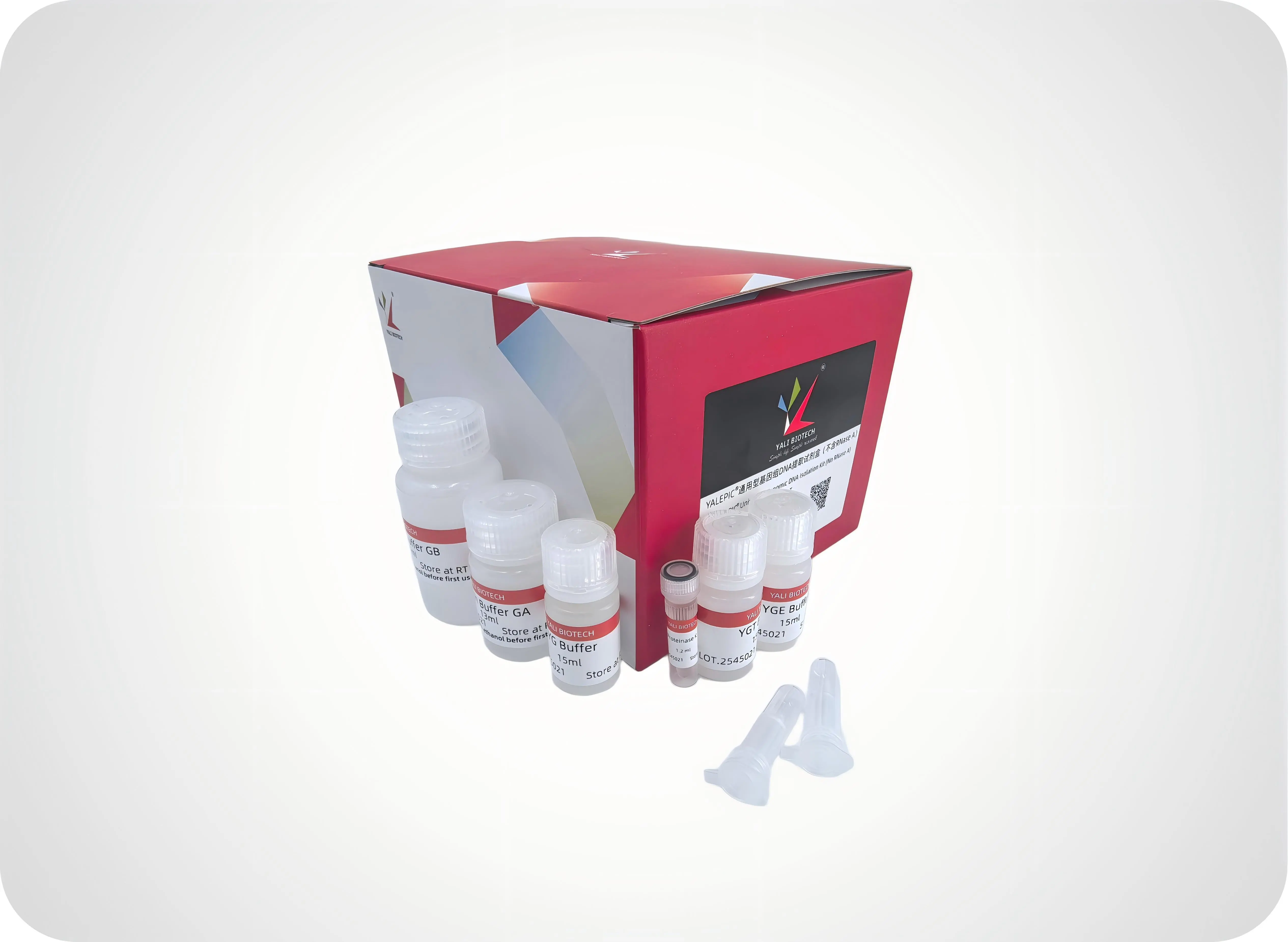
YALEPIC® Viral DNA/RNA Isolation Kit can extract viral DNA/RNA from multiple types of samples. The kit uses a unique lysis system, without high temperature incubation, and can significantly improve the recovery rate of trace nucleic acid . After specific adsorption on silica gel membrane, viral DNA/RNA can be quickly and efficiently purified. For a single sample, it only takes 15 minutes to finish extraction. And the products can be directly used for downstream related experiments such as reverse transcription, PCR, Real-Time PCR, NGS and Northern blot.
Suitable for whole blood, serum, plasma, swab, tissue, alveolar lavage fluid, cell culture supernatant and other samples
Transport at room temperature.
Storage at room temperature (10℃- 30℃) for one year.
The YALEPIC Viral DNA/RNA Extraction Kit is suitable for various sample types including whole blood, serum, plasma, sputum, lymph fluid, tissue homogenate, cell culture supernatant, urine, and various viral transport media (VTM). It is also suitable for nasopharyngeal swabs, oropharyngeal swabs, bronchoalveolar lavage fluid (BALF), and other respiratory samples for viral nucleic acid extraction.
Manual extraction for a single sample takes approximately 15 minutes. This kit uses the spin column method and supports simultaneous processing of multiple samples, limited only by centrifuge capacity. For high-throughput processing, YALI Biotech also offers a magnetic bead-based viral DNA/RNA extraction kit compatible with automated extraction platforms.
This kit does not contain phenol, chloroform, or other toxic organic solvents. The entire process is safe and convenient without exposure to toxic chemicals. Extraction can be performed on a standard lab bench without a fume hood (though processing potentially infectious samples should still be done in a biosafety cabinet). Waste disposal follows standard laboratory protocols, greatly reducing health risks.
The extracted viral DNA and RNA have high purity with thorough removal of inhibitors. They can be directly used for RT-PCR, real-time quantitative PCR (qPCR), Northern Blot, SNP genotyping, STR genotyping, in vitro translation, cDNA library construction, pharmacogenomics research, metagenomic sequencing, and more. We recommend evaluating extract compatibility based on specific downstream requirements.
The silica membrane adsorption technology maintains good binding efficiency even for low-concentration nucleic acids. For extremely low viral load samples, appropriately increase the starting sample volume (within the recommended range) or use high-sensitivity qPCR for detection. Note that for extremely low copy number samples, conventional OD measurement or electrophoresis may not detect the nucleic acids; qPCR or similar high-sensitivity methods are recommended.
Extracted viral DNA/RNA should be eluted with the kit’s elution buffer or RNase-free water. Short-term storage (within 24 hours) at 2-8 degrees C is acceptable. For long-term storage, aliquot and store at -20 degrees C (up to 6 months) or -80 degrees C (up to 12 months), avoiding repeated freeze-thaw. RNA samples should be protected from RNase contamination using RNase-free consumables and reagents.
Possible causes: (1) Low viral load in sample – increase starting volume; (2) Insufficient elution – pre-warm elution buffer to 65 degrees C before adding to the column; (3) Ethanol residue from wash steps – residual ethanol inhibits enzymatic reactions, spin the empty column for 2 minutes to remove ethanol completely; (4) Downstream assay issues – set up positive controls for troubleshooting. If problems persist, contact YALI Biotech technical support.
Core advantages: (1) Speed – only 15 minutes per sample, significantly faster than traditional column-based products; (2) Safety – completely free of toxic organic reagents; (3) Cost-effectiveness – competitive pricing while maintaining high purity and yield; (4) Flexibility – supports 200-400 microL variable sample volumes and multiple sample types; (5) Support – professional technical support team providing full-process service from experimental design to troubleshooting.




Production center: 4th floor, Building 9, Yangshan Science and Technology
Industrial Park,No. 8 Jinyan Road, Suzhou High-tech Zone
Marketing center: Pujiang High-tech Park, Minhang District, Shanghai
Copyright: 2026 YALI Biotech Co., Ltd.
 Scan to follow us