
An optimized spin column workflow that turns plant tissue into high-quality total RNA ready for downstream applications.
| Number | Specifications | Catalog Price | Add To Cart |
|---|---|---|---|
| YR23016 | 50T | Online Consult | + |
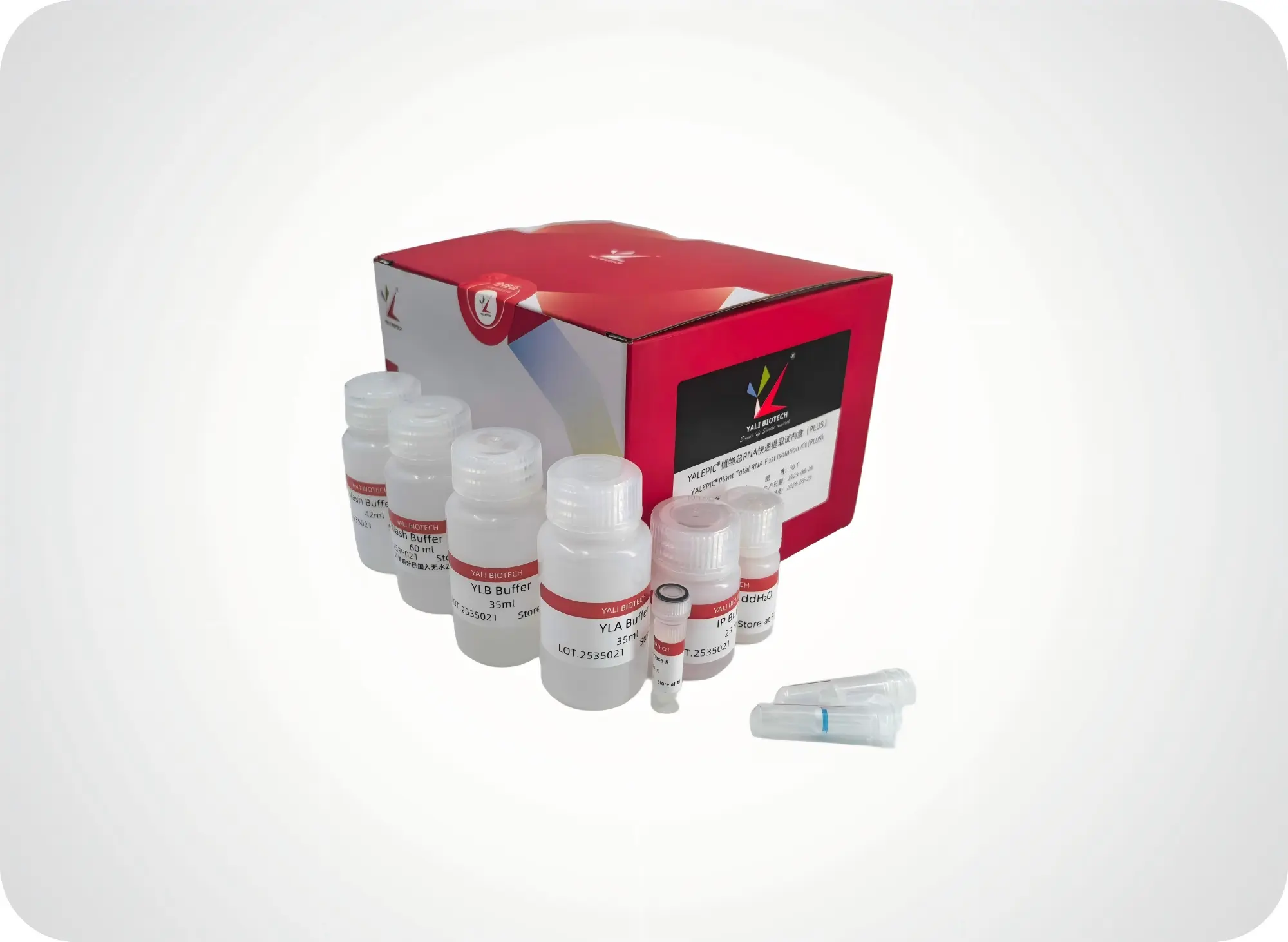
YALEPIC® Plant Total Fast RNA Isolation Kit(PLUS)can be used to quickly extract total RNA from plant tissues. The kit includes two solution systems designed for simple RNA extraction from a variety of plant tissues, polysaccharide and polyphenol rich plant tissues, fruit pulp , and fungi . The kit is based on silica column purification technology and does not involve toxic reagents (e.g., phenol or chloroform and β-mercaptoethanol) . The whole extraction process takes only 10 min. Fast gDNA Filter Columns in the kit effectively remove impurities and gDNA. FastPure RNA Columns RT efficiently bind to RNA and, paired with optimized buffers, yield high-purity total RNA with minimal gDNA residue and no protein or other impurities that can be used for a range of downstream experiments, including RT-PCR, real-time PCR, RNA library preparation, microarray analysis, Northern blot, and molecular cloning.
Leaf Tissue: 50–100 mg.
Polysaccharide-rich Storage Organs (e.g., Tubers, Storage Roots, Seeds): 20–50 mg.
Fruit Pulp (peel removed): 100–200 mg.
Fungal Material (e.g., mushrooms): 20–100 mg.
Transport at room temperature.
Store at 10 ~ 30°C for one year.
A1: The YALEPIC Plant Total RNA Rapid Isolation Kit (PLUS) is a universal product suitable for both common plant leaves (e.g., rice, maize, Arabidopsis, soybean, etc.) and specifically optimized for complex samples rich in polysaccharides and polyphenols, including tubers (potato), root tubers (sweet potato), seeds, fruit flesh (apple, grape, etc.), and fungal mycelia. One kit covers both common and complex samples — no need to purchase separate product lines.
A2: This kit uses a column-based rapid extraction protocol with the entire process performed at room temperature. From sample grinding and lysis to RNA elution takes only about 10 minutes, making it one of the fastest plant RNA extraction kits on the market. The workflow is straightforward — no phenol-chloroform extraction or low-temperature centrifugation required. Even beginners can quickly master the procedure.
A3: This kit employs a unique dual-column filtration system (Fast gDNA Filter Columns + Pure Columns RT) that efficiently removes genomic DNA during the extraction process. For most samples, no additional DNase I digestion is needed. For experiments with extremely stringent gDNA residue requirements (e.g., low-abundance gene RT-qPCR), a post-extraction DNase I treatment step can be added to ensure complete removal.
A4: No. This kit uses a proprietary safe lysis buffer formulation — no phenol-chloroform, beta-mercaptoethanol, or other traditional toxic reagents are needed throughout the entire extraction. This makes it safer and more environmentally friendly, particularly suitable for teaching laboratories, clinical testing facilities, and labs without hazardous chemical handling capabilities.
A5: The extracted total RNA has been verified by 1.2% agarose gel electrophoresis — 28S and 18S rRNA bands are clear with normal ratios, indicating good integrity. NanoDrop measurements typically show A260/A280 ratios between 1.9 and 2.1, indicating high purity. The RNA can be directly used for RT-PCR, real-time quantitative PCR (RT-qPCR), Northern Blot, microarray analysis, Poly(A) selection, in vitro translation, RNase protection assays, molecular cloning, and other downstream experiments.
A6: Common problems with polysaccharide- and polyphenol-rich plant samples (e.g., grape, apple flesh, potato tuber) include: polysaccharide co-precipitation making RNA difficult to dissolve, polyphenol oxidation causing RNA browning and degradation, and severe gDNA residue. This kit addresses these through an optimized lysis buffer that effectively inhibits polyphenol oxidation, a silica membrane that specifically adsorbs RNA combined with efficient wash buffers to remove polysaccharide residue, and a dual-column system that simultaneously eliminates gDNA contamination — significantly improving RNA extraction success rates for complex samples.
A7: Yes. This kit has been validated with various fungal mycelium samples and is suitable for total RNA extraction from filamentous fungi and other fungal samples. The recommended input for fungal mycelia is 20-100 mg. After thorough grinding, follow the standard protocol to obtain high-quality RNA.
A8: Common causes and solutions for low RNA yield: (1) Insufficient sample input — use the recommended amounts in the protocol; (2) Incomplete sample grinding — grind to a fine powder in liquid nitrogen and quickly transfer to lysis buffer; (3) Improper sample storage — use fresh samples or samples stored at -80°C without repeated freeze-thaw cycles; (4) Incomplete elution — apply elution buffer (RNase-free ddH2O) to the center of the membrane, optionally pre-warm to 56°C, extend room temperature incubation time, or perform a second elution to improve recovery.
A9: Column clogging is typically caused by: (1) Excessive sample input — reduce the starting material amount; (2) Incomplete grinding leaving large particles in the lysate — grind thoroughly, optionally increase lysis buffer volume and extend centrifugation time, and avoid pipetting precipitate when transferring supernatant. If the problem persists, contact YALI Biotech’s technical support team for further assistance.
A10: The YALEPIC Plant Total RNA Rapid Isolation Kit (PLUS) has catalog number YR23016, specification 50 T/kit, list price ¥850.00. Bulk purchase discounts are available. For inquiries or orders, call YALI Biotech’s service hotline at +86-512-66256010, email info@yalibiotech.com, or submit a request through the online contact form on our website.


Production center: 4th floor, Building 9, Yangshan Science and Technology
Industrial Park,No. 8 Jinyan Road, Suzhou High-tech Zone
Marketing center: Pujiang High-tech Park, Minhang District, Shanghai
Copyright: 2026 YALI Biotech Co., Ltd.
 Scan to follow us